
Pipeline construction
The majority of the pipeline would be constructed in sections, using an ‘open trench’ technique. This is a common method for pipeline construction which involves excavating a trench that is slightly larger than the pipeline, lowering the pipeline into the ground and then replacing the excavated material back into the trench.
An area of around 30m wide along the pipeline corridor would typically be needed for construction works including the movement of vehicles, but this could be reduced in environmentally sensitive areas such as the crossings of watercourses or hedgerows. At crossings with existing infrastructure and land features, this would be widened to help with logistics (e.g. vehicle parking, pipe storage).
Where the proposed pipeline crosses major roads, main rivers, railways or sensitive environmental sites, a ‘trenchless’ technique may be used to minimise impact. This would involve installing the pipeline under the feature, without digging a trench, to avoid disturbance. Preliminary locations where ‘trenchless’ construction methods are proposed are shown on the plans.
When our construction works are complete, we would reinstate the ground and all construction materials will be removed.
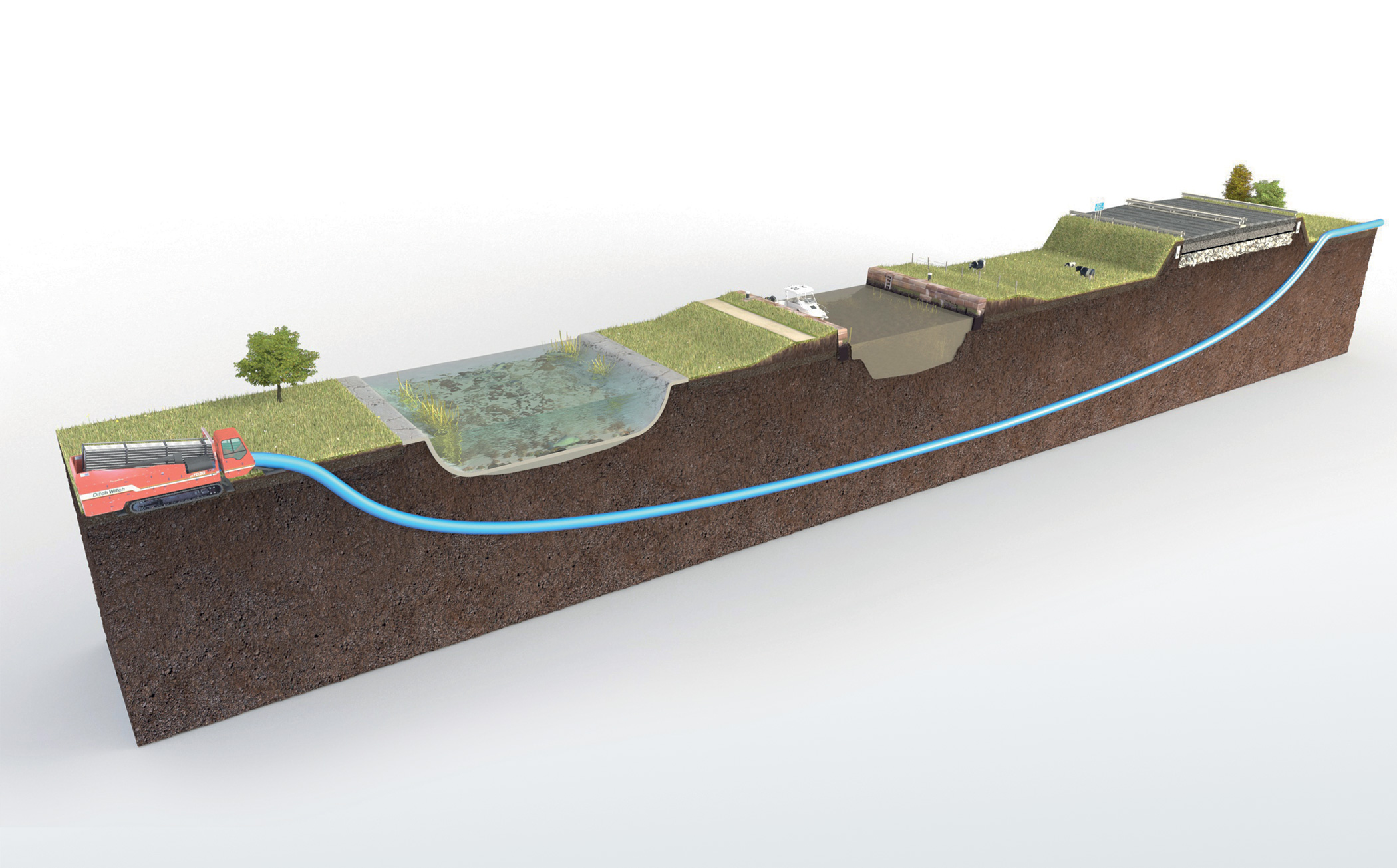
This illustrates how a trenchless technique would be used to install the pipeline under features like rivers or roads. There are various different methods of trenchless crossing we could use. Horizontal Directional Drilling (HDD), shown here, is one method. This involves a drill being sent underground from a rig located on a construction compound. A drill head guides the drill to ensure it follows the planned angle, depth, and exit point. Once the drilled bore is sufficiently open, a pipeline can be pulled through and connected to the rest of the system.